THE HISTORY OF BRITAIN
The history of Britain is fascinating and interesting, and hopefully with this section you will learn to love it too. You could think that you don't like history: maybe you didn't like it even at school!
However, understanding the history of a country will help you to understand the British people and its language. In fact, how many of you want to know why English has such a difficult pronunciation? Do you know why today English, Welsh, Scottish and Irish are languages so different from one another? Would you like to know who the Celts were? Do you know where the first inhabitants of Britain came from? By reading this section you will know, because our voyage around the centuries will join the history of Britain and the history of the English language. So, let's start our ride!
THE BEGINNINGS - THE IBERIANS
Of course, like all European Countries, there was a time when there were no inhabitants in Britain, and the island was a green, luxuriant land full of thick forests, water, game and fish, and with a mild climate. However, man has always wanted to discover new things and places, and about 2000 years before Christ the first men arrived by sea on the British island; Where did they come from? You'll probably never guess it, but the first inhabitants were the Iberians, so called because they probably came from Iberia, that is, the modern Spain. The southern and eastern coasts of Britain are low, have good natural harbours and also have navigable rivers; The western and northern coasts are not so accessible, so we assume that the Iberians arrived on the southern coasts. The Iberians were short, had dark hair and lived in the western and southern parts of Britain because they didn't have many tools and couldn't penetrate the thick forest present in the rest of the island. The lands where they lived weren't very fertile in comparison with the rest of Britain, especially because they were uplands, that is, mountainous regions.
However, the Iberians were probably very good at agriculture because they
terraced the hills (some of these terraced hills can still be seen today in Britain), and cultivated different kinds of cereals, using the
hoe and the
spade. They also
bred goats,
oxen
and pigs, but were also hunters and were good at
weaving
and at
building.
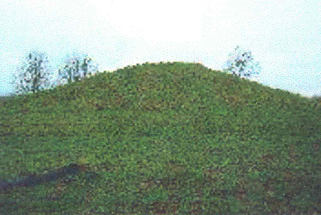
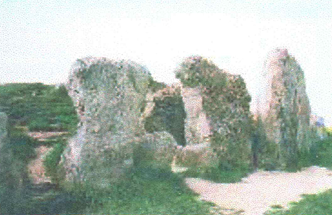
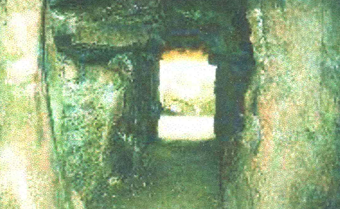
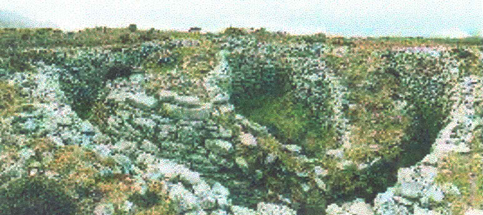
In picture 1 you can see the typical barrow, similar to a sort of hill. This one is found in Ninewells.
There are different kinds of barrows: in pictures 2 and 3 it is shown the barrow in West Kennet (picture 2 shows the entrance of the barrow, while picture 3 shows the inside), and in picture 4 you can admire the barrow of Ballowell. As you can see. they are all structured in different ways. The barrows in Britain are hundreds, mainly divided in 4 main types depending on the use the Iberians made of them.
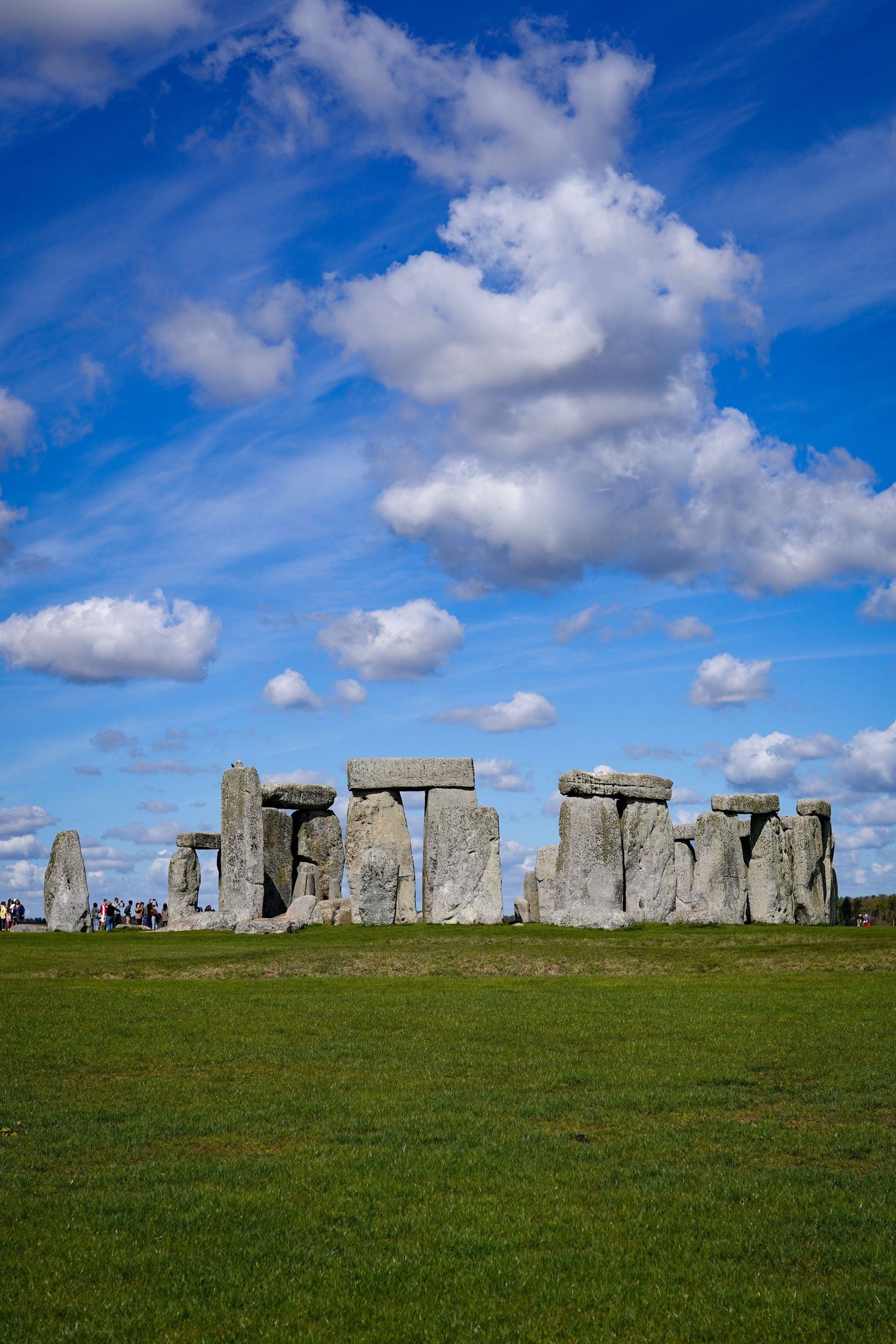
This is sure because, apart from the terraces, they built an incredible number of huge monuments which can still be admired today: the BARROWS, which were large tombs in the shape of a hill made of earth and stone, the HENGES, which were great circles of ditches and earthen banks in which often a megalithic temple rose, made of enormous stones. The term "henge" means hanging stone, and in fact they were often made of two vertical stones and one horizontal stone on top of them (the best known is Stonehenge; next month there will be an article about it in the Monuments on Britain page). The henges were centres of religious, political and economic power.
The henges also show that the Iberians had conspicuous knowledge of building techniques, since elevating those stones required great skills. The idea we can have of this people is that it was quite developed and civilised. From their buildings we learn that they were a very well organised people and we are able to know more about them than about the Celts or other tribes living after them. But there's a lot more to know about the Iberians. However, it's better to know little by little. That's why our fascinating travel will continue in the next issue, where we'll learn more about the life, culture, language and inheritance of the Iberians. Don't miss it!
This, below, is a particular of the henges of
Stonehenge: you can see the typical megalithes formed by two vertical stones and one horizontan stone at the top. These buildings are so enormous that their construction surely needed a lot of organisation and good co-operation. In fact the stones came from a distant place and different kinds of transport were needed in order to bring them in the same place.
VOCABULARY
Hopefully: si spera
However: comunque
Welsh: gallese
Irish: irlandese
join: unire
ride: cavalcata
like: come
inhabitants: abitanti
game: selvaggina
mild: mite
guess: indovinare
that is: cioè
harbour: porto
short: basso di statura
tools: attrezzi, strumenti
to terrace: terrazzare
hoe: zappa
spade: vanga, pala
to breed: allevare
goat: capra
oxen. buoi
weaving: tessitura
huge: enorme
barrow: tumulo
henge: tempio me-galitico
ditch: canale
earthen: di terra